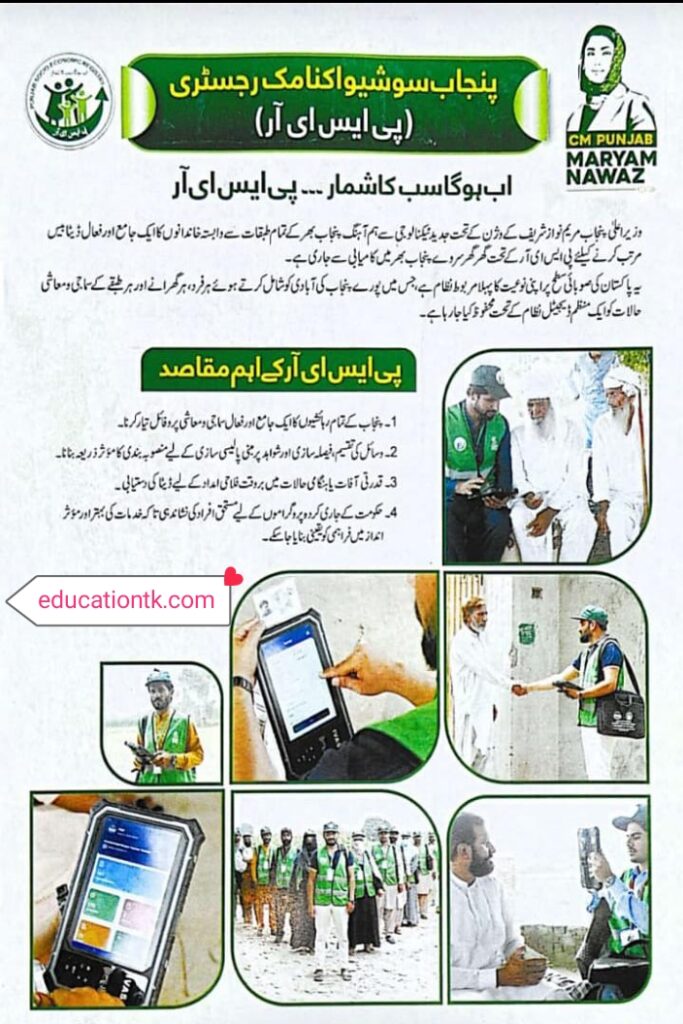
Punjab Socioeconomic Registry (PSER)
Punjab Socioeconomic Registry (PSER): CM Maryam Nawaz’s Vision
Now, everyone will be counted. This powerful statement marks the launch of a transformative initiative in Pakistan’s largest province. Under the visionary leadership of CM Punjab, Maryam Nawaz Sharif, the government is successfully rolling out the Punjab Socioeconomic Registry (PSER). This ambitious project involves a comprehensive household survey across Punjab, aiming to create a dynamic and technologically advanced database of every family. It’s more than just a census; it’s a digital map of the province’s human landscape, designed to make governance more responsive, effective, and equitable for all citizens. This article explores the core objectives of the PSER, its significance, and how it will impact the lives of millions.
A Digital Revolution in Public Service
The Punjab Socioeconomic Registry (PSER) is the first integrated system of its kind at a provincial level in Pakistan. Its goal is to capture and digitally preserve the socioeconomic conditions of every individual, household, and community. By moving away from outdated paper records and fragmented data, the Punjab government is building a unified digital ecosystem. This system will serve as the backbone for future policy-making, ensuring that decisions are based on accurate, real-time data rather than estimates. This is a crucial step towards transparent and evidence-based governance.
Main Objectives of the PSER Initiative
The PSER program is built on four foundational pillars, each designed to improve the delivery of government services and support to the people of Punjab:
- Comprehensive Socio-Economic Profiles: To develop a detailed and functional socio-economic profile of every resident in Punjab, capturing key data points beyond just population numbers.
- Effective Planning and Resource Allocation: To create a powerful tool for government bodies to plan resource allocation, make informed decisions, and formulate evidence-based policies that address the real needs of the populace.
- Rapid Emergency Response: To ensure the availability of reliable data for providing timely welfare assistance during natural disasters, economic shocks, or other emergencies, making sure aid reaches the most vulnerable first.
- Targeted Welfare Programs: To accurately identify eligible individuals and households for government programs, ensuring that benefits like subsidies, health insurance, and educational grants are delivered efficiently and without leakages.
PSER at a Glance: Key Features
| Feature | Description |
|---|---|
| Leadership | Spearheaded by the vision of Punjab Chief Minister Maryam Nawaz Sharif. |
| Scope | Covers the entire population of Punjab, including every household. |
| Technology | Utilizes a modern, systematic digital system for data collection and management. |
| Primary Goal | To ensure efficient, transparent, and targeted delivery of social welfare services. |
| Data Utility | For policy planning, disaster management, and identifying beneficiaries for government schemes. |
This systematic approach ensures that the government can respond with precision. For more information on official government initiatives, you can visit the official Government of Punjab website.
Frequently Asked Questions (FAQs)
1. What is the Punjab Socioeconomic Registry (PSER)?
The PSER is a large-scale project by the Government of Punjab to conduct a household survey and create a digital database containing the socioeconomic information of every resident. It aims to improve planning, resource allocation, and the delivery of welfare services.
2. Who is leading the PSER initiative?
The PSER initiative is being conducted under the vision and leadership of the current Chief Minister of Punjab, Maryam Nawaz Sharif, as part of her commitment to data-driven governance and public welfare.
3. Is participation in the PSER survey mandatory?
Cooperation from all households is crucial for the success of the program. Accurate data from every family ensures that the registry is comprehensive, which in turn helps in fair identification for government support schemes and services for all eligible citizens.
4. How will my data be used?
Your data will be securely stored and used by government departments for evidence-based policymaking, identifying beneficiaries for welfare programs (like health cards or subsidies), and planning emergency response efforts during natural disasters.
5. Will my personal information be kept confidential?
Yes, the government is committed to ensuring data privacy and security. The information collected is for official planning and welfare purposes only and will be protected under data protection regulations to prevent misuse.
6. How is PSER different from a regular census?
While a census primarily counts the population, the PSER goes deeper by collecting detailed socioeconomic data. This includes information about income, education, health, and living conditions to create a functional profile for better service delivery.
7. When will the PSER survey be completed?
The household survey is being conducted in phases across Punjab. Official announcements from the government will provide specific timelines for different districts and tehsils. The project is currently being successfully conducted across the province.
8. How does PSER help in disaster management?
In emergencies like floods or earthquakes, the PSER database will allow authorities to quickly identify the most affected and vulnerable populations in a specific area, enabling faster and more targeted distribution of aid and relief services.
9. Will this registry be updated regularly?
Yes, a key feature of this digital system is its ability to be updated. This ensures the database remains current and reflects the changing socioeconomic conditions of the population, making it a sustainable tool for governance.
10. How can I ensure my family is included in the PSER?
Survey teams authorized by the government are conducting door-to-door data collection. Ensure you provide accurate information to these teams when they visit your area. Stay informed through local government announcements about the survey schedule.
Conclusion: A New Era of Governance
The Punjab Socioeconomic Registry (PSER) represents a monumental leap forward in governance for Punjab. By embracing modern technology and data-driven strategies, the administration under CM Maryam Nawaz is building a foundation for a more prosperous and equitable future. This comprehensive database will not only streamline welfare delivery but also empower policymakers with the insights needed to address the root causes of poverty and inequality. Ultimately, the PSER is a promise that every person counts and that their needs will be seen, understood, and addressed effectively.
What are your thoughts on this initiative? Leave a comment below and share this article with your network!
📢 اہم اطلاع برائے گھرانے – PSER سروے کا موقع!
حکومت پنجاب کی جانب سے PSER (Punjab Social & Economic Registry) ٹیمیں آپ کے علاقے میں سروے کے لیے آ رہی ہیں۔ آپ سے گزارش ہے کہ:
✅ اپنی معلومات (شناختی کارڈ، گھر کے افراد، وغیرہ) PSER ٹیم کو لازمی فراہم کریں۔
✅ آپ کا ڈیٹا مکمل محفوظ اور خفیہ رکھا جائے گا۔
✅ یہ سروے بالکل BISP کی طرز پر ہے، مگر اس میں زیادہ اور بہتر پروگرامز شامل ہیں۔
🟩 PSER سے منسلک ممکنہ فائدے:
- رمضان پیکیج
- احساس راشن پروگرام
- تعلیمی وظائف (وظیفہ برائے طلبہ)
- سستا آٹا اسکیم
- ہیلتھ کارڈ / مفت علاج
- ترقیاتی امداد (گھریلو سطح پر)
- بیواؤں، یتیموں اور بزرگوں کے لیے امدادی پروگرامز
—
لہٰذا اپنی فیملی کا سروے لازمی کروائیں اور PSER ٹیم کا ساتھ دیں۔
جزاکم اللہ خیراً
(یہ پیغام اپنے عزیزوں، رشتہ داروں اور اہلِ محلہ تک لازمی پہنچائیں)